












Listen to this story · 4 min
A work arrives, and then it sits against a wall for three weeks because nobody wants to put a hole in the plaster in the wrong place.
Here is what actually matters, in roughly the order it matters.
Height
The centre of the work should sit about 57 to 60 inches from the floor. That is standing eye level for most people, and it is the figure galleries and museums use, which is why a room hung at that height feels immediately settled.
The common mistake is hanging too high. If you are unsure, go lower rather than higher.
Two exceptions. Above a sofa or a console, leave roughly 6 to 8 inches between the top of the furniture and the bottom of the frame, so the two read as one arrangement rather than two unrelated objects. And in a room where you are mostly seated, a dining room or a study, drop the whole thing a few inches.
Light
This is the one that matters most, and the one most often got wrong.
Never hang a work in direct sunlight. Not for part of the afternoon, not filtered through a sheer curtain. Ultraviolet light fades pigment, and the damage is cumulative and permanent. A south-facing wall that gets two hours of sun a day will visibly alter a work over a decade.
Watercolour is particularly vulnerable, which is worth knowing if you own an original. Works on paper and canvas produced to archival standards hold their colour far longer, but no pigment is immune.
The wall you want is one that never takes direct sun. If the only place a work fits is a bright wall, use UV-filtering glazing when you frame, and draw the curtains in the afternoon.
For deliberate lighting, a picture light or an angled ceiling spot at roughly 30 degrees will light the surface without throwing glare back at the viewer. Keep the fitting far enough away that it never warms the frame.
The wall itself
Avoid bathrooms, avoid the wall directly above a radiator or a working fireplace, and avoid exterior walls in older houses that run cold and damp. Paper responds to humidity by expanding and contracting, and over years that movement shows as rippling under glass.
What paper likes is what people like: stable temperature, moderate humidity, no extremes.
Fixings
Match the fixing to the weight, and when in doubt use two. Two hooks spaced apart will hold a frame level for years, where a single central hook lets it drift out of true every time a door closes.
In drywall, use proper anchors rather than a nail pushed into plasterboard. In plaster over lath, find the lath. In masonry, drill.
Framed pieces from the gallery arrive ready to hang, with hardware and wire already fitted.
More than one
If you are hanging a group, keep a consistent gap between frames, usually 2 to 3 inches, and treat the whole arrangement as a single rectangle with its centre at eye level. Lay the group out on the floor first and photograph it before anything is fixed to the wall.
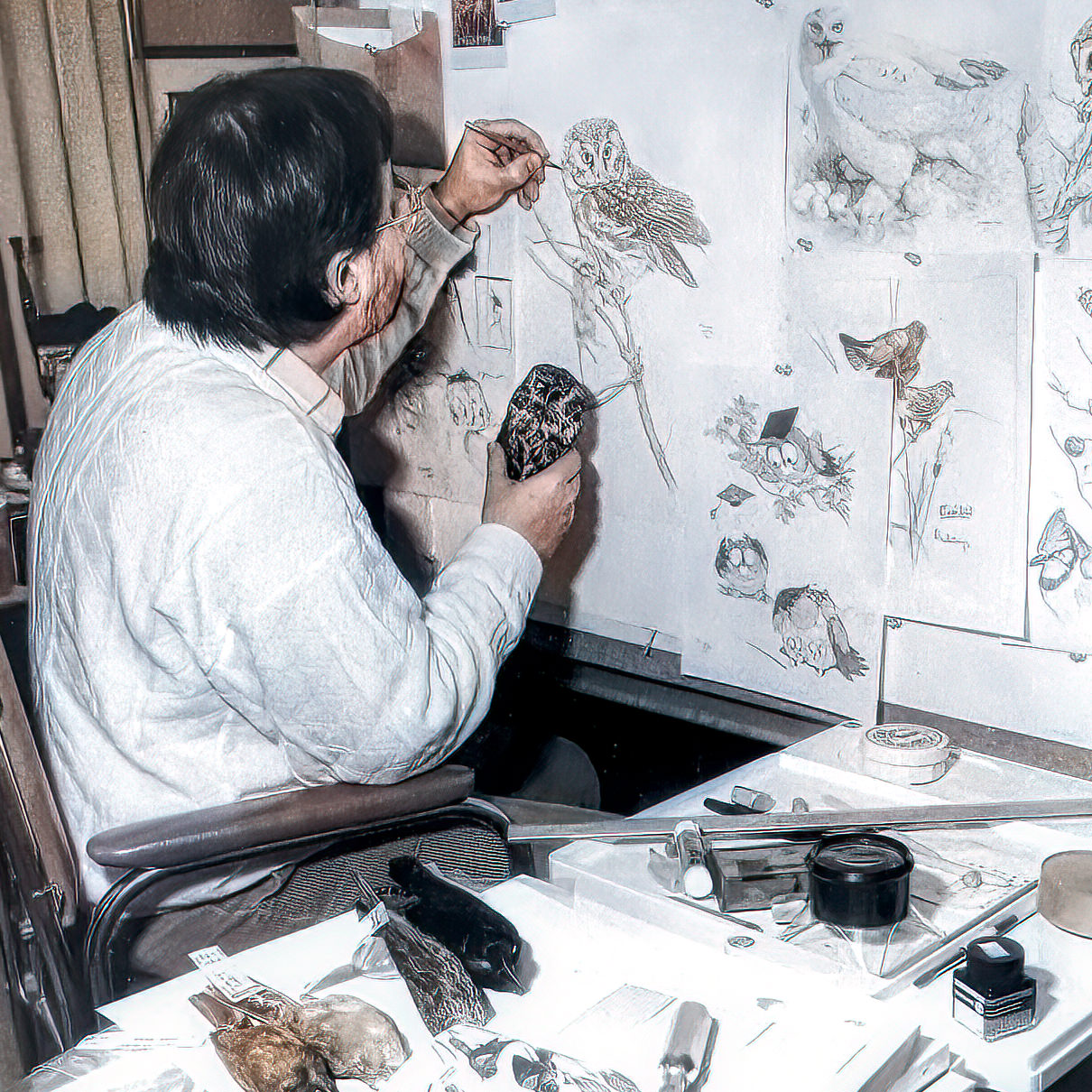
Groups work best when something is shared: subject, palette, frame, or period. A wall of owls holds together. A wall of one owl, one landscape and one botanical usually does not, unless the frames unify them.
A last thought
The best position in a room is rarely the most prominent one. It is the wall you happen to look at while you are doing something else, from a chair you sit in every day.
A painting you walk past is decoration. A painting you keep noticing is something else.
Michael Loates, Owner
Glen Loates R.C.A., Artist


Leave a comment (all fields required)